
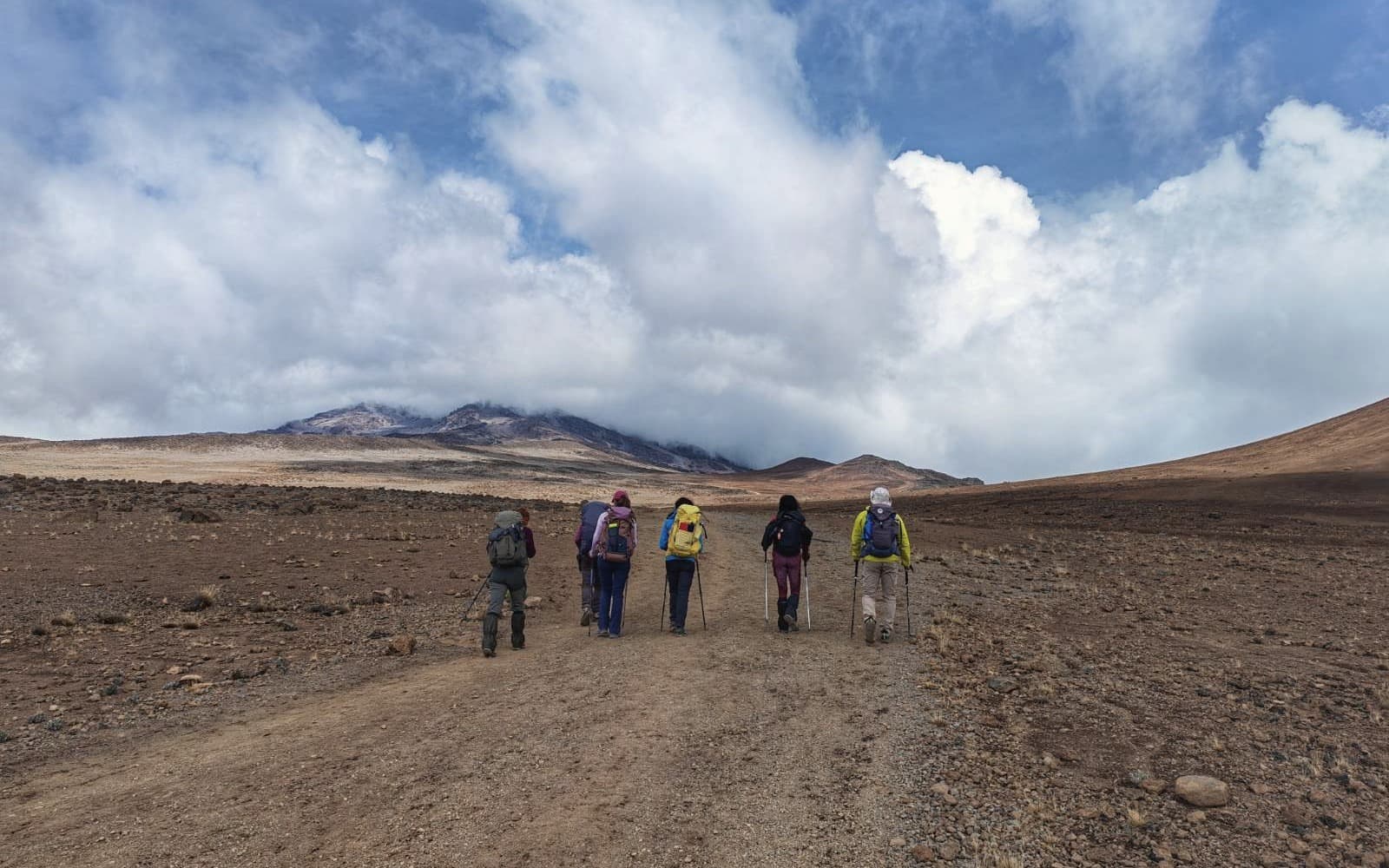
I spend a lot of my weekends walking. Sometimes it is a few hours, sometimes an entire day, sometimes several days in a row. And over the years I have noticed that something changes after you have been moving for a while.
People talk differently when they walk.
At the beginning of a hike, conversation is usually ordinary: work, food, plans, how far we have left to go, whether those clouds mean rain. Then, somewhere along the way, the conversation can change without anyone deliberately changing it.
Someone starts talking about something more personal—sometimes something they have been carrying for a long time. There is rarely a formal introduction. They might be looking at the ground, watching where they put their foot, or trying to catch their breath while they say it. There is no need to stop and make the moment important. You hear it, perhaps say something, and keep walking.
I have been part of many conversations like this. And I have often wondered whether the same things would have been said, in the same way, if we had been sitting across from each other at a table.
Studying psychology and psychotherapy gave me another language for thinking about something I had already been experiencing for years: our psychological life does not happen independently of our bodies, our surroundings, or the way we are physically positioned in relation to another person.
Much of psychotherapy still takes place in a very particular setting: a room, two chairs, relative stillness, and a period of time deliberately protected from the rest of life. There are important reasons for that. Privacy, boundaries, consistency, and the stability of the therapeutic relationship make forms of exploration possible that a casual walk cannot provide.
But I have become increasingly curious about the other side of this: What happens when reflection is not still?
1. Walking Changes Attention
When we sit and think about a problem, something interesting can happen: our attention begins to narrow around it. We go over the same conversation, the same decision, the same question.
Sometimes this is useful. Sometimes we genuinely need to stay with something long enough to understand it. But sometimes thinking becomes repetitive. We are putting enormous mental effort into a problem without necessarily seeing anything new. Psychology describes one version of this as rumination: repetitive thinking that keeps returning to the same material.
And we are never completely neutral while doing it. Our expectations, previous experiences, fears, beliefs, and defence mechanisms influence what we notice and how we interpret what is happening.
Walking does not suddenly remove any of that. But it changes the conditions in which thinking happens:
- Part of your attention has somewhere else to go: You have to watch your step.
- You notice the sensory environment: The ground, your breathing, the temperature, whether the trail is becoming steeper, a sound somewhere in the trees, or the person walking next to you.
- You are thinking, but you are not only thinking.
There is research that makes this particularly interesting. In a series of experiments, psychologists Marily Oppezzo and Daniel Schwartz found that walking increased divergent thinking—the kind of thinking involved in generating different possibilities and associations. Interestingly, the effect was not the same for tasks where people had to find one correct answer. Walking seemed particularly useful for opening thought rather than simply making people cognitively “better” at everything (Oppezzo & Schwartz, 2014).
I like that distinction. Walking may not give us the answer; it may help us see that there is more than one possible answer.
And the broader relationship between physical activity and cognition is not insignificant either. A recent meta-review combining 30 systematic reviews found that even a single period of exercise had a small-to-moderate positive effect on cognition, including attention, executive functioning, memory, and information processing (Chang et al., 2025).
Of course, I am not thinking about any of this while climbing. What I notice is much simpler:
- At the beginning of a hike, people often talk constantly.
- As the terrain becomes steeper, sentences become shorter and conversation slowly disappears.
- Eventually, everyone becomes occupied with something very basic: breathing and taking the next step.
For a while, there is not much space to analyse anything. The body interrupts.
And I think there is something valuable about that interruption. Not because difficult thoughts disappear when we walk—they often don’t. But sometimes the mind needs to stop approaching the same question from exactly the same position.
Then the trail becomes easier. Breathing settles. Someone starts talking again. And sometimes the conversation returns slightly changed: not necessarily with an answer, just with a little more space around it.
2. There Is Something Different About Walking Side by Side
There is another thing I have noticed repeatedly: some conversations seem easier when two people are moving in the same direction rather than sitting opposite each other.
When we sit face to face, the other person’s face becomes a major part of the interaction. We notice their expression—whether they look surprised, worried, interested, or uncomfortable. And then we notice our own reaction to their reaction.
Eye contact can be deeply connecting. It communicates attention and presence, and it is an important part of many therapeutic relationships. But being looked at also affects us physically. Research on eye contact has found that direct gaze can increase autonomic arousal, particularly when we experience that the other person is actually able to see us. In other words, there appears to be something psychologically significant not only about seeing another person, but about the experience of being seen by them (Hietanen, Peltola, & Hietanen, 2020).
That makes intuitive sense to me. Being seen can feel reassuring and intimate, but when we are trying to say something difficult, it can also make us more aware of ourselves:
How am I saying this?
What does my face look like?
What are they thinking?
Was that too much?
On a trail, the arrangement is different. You don’t have to look at someone while saying every word. You can look at the mountain ahead, watch where you are stepping, adjust your backpack, or walk quietly for a while. And the person is still there. There is human presence without continuous visual attention.
I would be careful about saying that people’s psychological defences simply “go down” when they walk. Defence mechanisms and our established ways of relating to others do not disappear because the setting changes. But I do think the conditions around them change:
- There is less continuous monitoring of the other person’s face.
- Attention can move between the conversation, the body, and the environment.
- It gives some thoughts a little more room to appear before we immediately evaluate what the other person thinks of them.
There is also something I find difficult to ignore about the physical position itself. We are not facing each other; we are facing the same direction. We are going somewhere together.
I don’t want to attach more psychological meaning to that than it deserves, but after years of hearing people say surprisingly personal things while walking beside me and staring straight ahead, I find it difficult to believe that the arrangement makes no difference at all.
3. The Body Is Already Part of the Conversation
Psychology can sometimes become very verbal. We ask:
What are you thinking?
What does this mean?
Why do you think you reacted that way?
These are important questions, but human experience does not happen only in words.
We experience stress physically through tight shoulders, shallow breathing, restlessness, exhaustion, tension in the stomach, changes in heart rate, an impulse to move, or sometimes the feeling that we cannot move at all. We experience safety physically, too.
There is a useful concept in psychology and neuroscience here: interoception. Interoception refers to how we sense and process signals coming from inside the body—heartbeat, breathing, hunger, temperature, visceral sensations, and changes in physiological arousal. And those signals are not just background information while the brain gets on with the “real” psychological work; they are involved in emotional experience itself.
Research on interoception has increasingly shown that emotion emerges through an ongoing interaction between bodily signals, the brain’s interpretation of those signals, previous experience, and the situation we are currently in (Critchley & Garfinkel, 2017). That is one of the reasons the simple division between “mind” and “body” has become increasingly difficult for me to accept—especially in the mountains.
After several hours of walking uphill, psychology becomes extremely embodied:
- Your mood affects how the climb feels.
- Fatigue affects the way you think.
- Fear changes your breathing.
- Stress changes muscle tension.
- Hunger changes patience.
- Cold changes attention.
The body continuously gives you information: slow down, drink, eat, rest, keep going.
At altitude, that relationship becomes even more obvious. As we climb higher, atmospheric pressure falls and less oxygen is available with each breath. At sufficiently high altitudes, hypoxia can begin to affect cognitive performance as well as physical performance. A systematic review of 52 studies examining cognition at altitude found effects across areas including attention, concentration, and executive functioning, although the results varied considerably depending on altitude, exposure, and acclimatisation (Bliemsrieder et al., 2022).
I find this fascinating because it makes the relationship between body and mind impossible to treat as an abstraction. Sometimes the world really does look psychologically different because our physiology has changed. You may be tired, hungry, dehydrated, cold, overheated, or simply several hours into physical effort. That doesn’t make our psychological experience less real; it means the body is part of that experience.
And sometimes the body also brings us very firmly back to the present. There is a strange simplicity in having to pay attention to the next step.
4. Nature Changes the Quality of Attention
Movement is only part of what interests me about walking. The other part is where we are walking, because nature does seem to matter.
There is a psychological theory called Attention Restoration Theory, originally developed by Rachel and Stephen Kaplan, which proposes that some forms of attention become fatigued through prolonged effort. Much of everyday life requires this kind of directed attention:
Ignore that notification. Finish this task. Listen during the meeting. Switch to another window. Read the message. Remember what you were doing before the message arrived. Ignore something else. Repeat.
Natural environments engage attention differently. A view, movement in the trees, water, clouds, changing light, or the shape of a trail can attract attention without requiring the same kind of concentrated cognitive effort. The Kaplans called this quality soft fascination.
There is experimental evidence behind the idea:
- Attention Restoration: In one study, Berman, Jonides, and Kaplan compared people who walked through a natural environment with those who walked through an urban one. After the nature walk, participants performed better on measures of directed attention (Berman, Jonides, & Kaplan, 2008).
- Reduced Rumination: In another experiment, Gregory Bratman and colleagues asked participants to take a 90-minute walk either through a natural environment or alongside a busy urban road. Those who walked in nature reported lower rumination afterwards, together with reduced activity in a brain region associated in that study with repetitive negative self-focused thought (Bratman et al., 2015).
That is much closer to how I experience nature myself. The mountain gives your attention somewhere to go without constantly asking something from you. You notice, but you don’t necessarily have to do anything with what you notice.
There is something different about having your attention repeatedly drawn outward: a tree, a change in weather, a river, the colour of the sky, a difficult section of trail, the sound of somebody walking behind you. Your mind can still wander, you can still worry, you can still think about work for half the mountain—but the environment keeps offering you something else to return to.
When we look at research more broadly, the pattern becomes clear. A systematic review and meta-analysis of nature-based outdoor interventions found improvements in outcomes including depressive mood, anxiety, positive affect, and negative affect (Coventry et al., 2021). The interventions varied considerably—including green exercise, gardening, and other structured nature-based activities—so we should not reduce this to “hiking makes people happy.” But the overall evidence supports something many people recognise intuitively: contact with natural environments can contribute meaningfully to psychological wellbeing.
So I don’t think nature is merely a pleasant background for movement. I think it contributes something of its own:
- Part of it is restoration of attention.
- Part may be sensory.
- Part may come from physical activity.
- Part may come from temporarily stepping outside the contexts in which our everyday problems usually exist.
- And perhaps part of it is simply scale: mountains are very good at reminding us that our thoughts are important without necessarily being the only thing happening in the world.
At the same time, I don’t think someone needs to climb a mountain to experience this. A forest helps, a river helps, a park can help. Sometimes even a tree-lined route through a city creates enough of a shift. The important thing for me is that psychological experience is always happening somewhere. Environment is part of that somewhere.
5. Movement Is Not a Replacement for Psychotherapy
I think this distinction is still important: a walk is not psychotherapy.
A mountain guide is not automatically doing therapeutic work because meaningful conversations happen on a trail, and a meaningful conversation is not the same thing as therapy. Psychotherapy provides something different: continuity, boundaries, privacy, responsibility, psychological understanding, and a relationship intentionally built around therapeutic work. Movement does not replace that. Nature does not replace that.
But I also don’t think psychological wellbeing belongs exclusively inside a therapy room. What happens between sessions matters:
- How we sleep matters.
- How we move matters.
- Where our attention goes matters.
- How connected or disconnected we are from our bodies matters.
- The environments in which we spend our days matter.
There is now a growing body of research supporting something that, for me, started simply as an observation from years of walking: movement and natural environments can influence attention, cognition, emotion, and the way we experience ourselves.
That does not mean every walk needs to become therapeutic. Actually, I hope it doesn’t. There is something exhausting about turning every healthy part of life into another assignment for self-improvement.
Sometimes a walk should just be a walk. You don’t have to process something. You don’t have to become more mindful. You don’t have to return with an insight. Sometimes feeling the body move, looking at something green, and being somewhere other than behind a screen is enough.
And sometimes, almost accidentally, something else happens too.
6. What the Mountains Keep Teaching Me
One of the things I love about hiking is that progress becomes very concrete. You cannot arrive at the summit by thinking about the summit. You walk:
- Sometimes quickly.
- Sometimes painfully slowly.
- Sometimes you stop.
- Sometimes you realise that turning around is the sensible decision.
- Sometimes the part of the route that looked intimidating from far away becomes manageable once you are standing in front of it.
- And sometimes the opposite happens.
I don’t want to stretch the mountain metaphor too far. Life is not a trail with a clearly marked summit, and psychological change is rarely a straight climb upward. But perhaps that is exactly why I keep returning to hiking. Reaching the summit does not mean that you always walk uphill. A real trail goes up, then down, then sideways. Sometimes you lose elevation you worked very hard to gain. Sometimes the route seems to take you away from where you are trying to go—and it is still the route.
I think psychological change often looks more like that than the neat upward line we imagine when we talk about growth:
- Sometimes there is progress.
- Sometimes repetition.
- Sometimes retreat.
- Sometimes rest.
- Sometimes a period in which nothing seems to be changing at all.
- And sometimes you only realise how far you have travelled when you turn around.
Maybe that is one of the reasons movement has become so connected to how I think about psychology. Not because walking is therapy, and not because mountains contain answers, but because mind, body, and environment are much harder to separate when you are actually moving through the world.
Sometimes movement is simply movement: a little more space, a different perspective, a body that has been sitting behind a screen all day finally moving again. A conversation that becomes possible because nobody has to look directly at the other person while saying the difficult part. A thought that has been stuck for days loosening slightly somewhere between one kilometre and the next.
After years of moving through mountains with other people, I find it increasingly difficult to think about psychological wellbeing as something that happens only from the neck up.
Sometimes we need to sit with what is happening inside us. And sometimes it helps to walk with it for a while.
References
- Berman, M. G., Jonides, J., & Kaplan, S. (2008). The cognitive benefits of interacting with nature. Psychological Science, 19(12), 1207–1212. DOI: 10.1111/j.1467-9280.2008.02225.x.
- Bliemsrieder, K., Weiss, E. M., Fischer, R., Brugger, H., Sperner-Unterweger, B., & Hüfner, K. (2022). Cognition and neuropsychological changes at altitude—A systematic review of literature. Brain Sciences, 12(12), 1736. DOI: 10.3390/brainsci12121736.
- Bratman, G. N., Hamilton, J. P., Hahn, K. S., Daily, G. C., & Gross, J. J. (2015). Nature experience reduces rumination and subgenual prefrontal cortex activation. Proceedings of the National Academy of Sciences, 112(28), 8567–8572. DOI: 10.1073/pnas.1510459112.
- Chang, Y. K., Ren, F. F., Li, R. H., Ai, J. Y., Kao, S. C., & Etnier, J. L. (2025). Effects of acute exercise on cognitive function: A meta-review of 30 systematic reviews with meta-analyses. Psychological Bulletin, 151(2), 240–259. DOI: 10.1037/bul0000460.
- Coventry, P. A., Brown, J. V. E., Pervin, J., et al. (2021). Nature-based outdoor activities for mental and physical health: Systematic review and meta-analysis. SSM – Population Health, 16, 100934. DOI: 10.1016/j.ssmph.2021.100934.
- Critchley, H. D., & Garfinkel, S. N. (2017). Interoception and emotion. Current Opinion in Psychology, 17, 7–14. DOI: 10.1016/j.copsyc.2017.04.020.
- Hietanen, J. O., Peltola, M. J., & Hietanen, J. K. (2020). Psychophysiological responses to eye contact in a live interaction and in video call. Psychophysiology, 57(6), e13587. DOI: 10.1111/psyp.13587.
- Oppezzo, M., & Schwartz, D. L. (2014). Give your ideas some legs: The positive effect of walking on creative thinking. Journal of Experimental Psychology: Learning, Memory, and Cognition, 40(4), 1142–1152. DOI: 10.1037/a0036577.